
Why You Should Choose Nepal for Your Next Destination
Sometimes it's just a time when you want to do different activities, and see a place in a way that's totally untouched from your normal routine. One of these is Nepal.
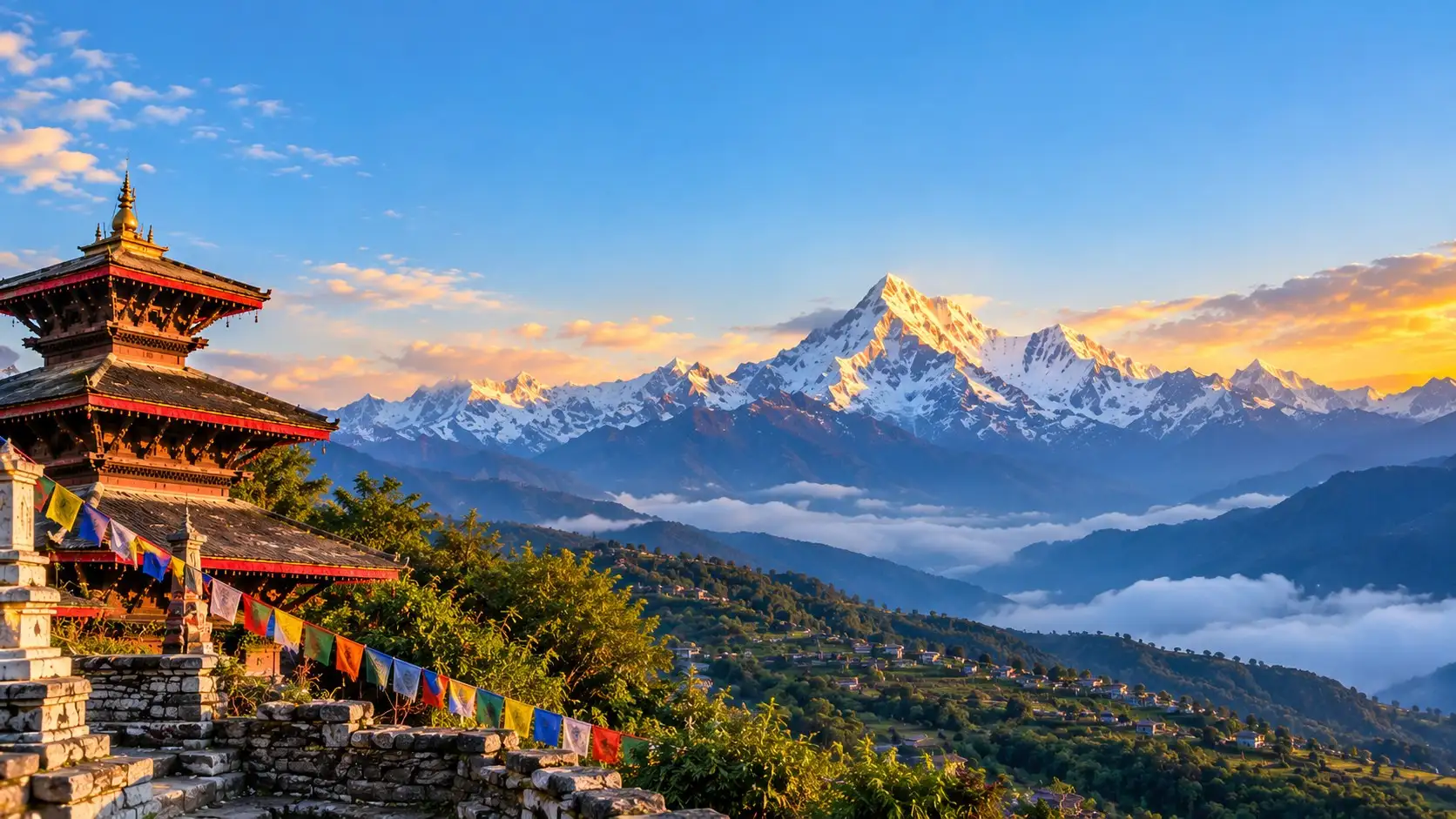
But there is a certain hour you'll be there - typically early morning before the sun rises above the mountains - when the mountains strip you of your energy, leaving you feeling drained. You might be exhausted, chilly and asking yourself why you ever thought such a journey for a few days was worth your while or whether you imagined you'd still enjoy it in freezing weather. Then the snow on a Himalayan peak begins to turn golden, and for a few minutes all that matters is that. The altogether not so comfy beds, awkward legs, late flights and not so secure shower, is a lot preferable.
The reason why Nepal is not devoid of interest is the diversity in so small a country. It is possible to be in a warm, almost tropical part of the country and, not long afterwards, gazing at mountains blanketed in snow. Ancient temples, busy city streets, quiet villages, down rivers and surprisingly comfortable mountain lodges! Then of course there are the teahouses, where it can be much simpler and they might even have a yak-dung stove.
Some places in Nepal may not be so pretty, even on mountains. But in Nepal, it is not always a walk in the park, so it's best to know this before heading there. Walking can test your legs, your plans may not work out as initially envisioned and, roads can be rough. But this is another aspect of the experience too. Do not go to Nepal because it's easy! You go because you wish to see something that you can't so much find anywhere.
Home to the World's Highest Peaks
Nepal is not only a mountain country; No other country than Nepal can be called the mountain country. Eight of the world's highest 10 summits lie inside or along its borders, including those of the highest peak in the world - Mt Everest. But it's not something that's out of the reach of even the average hiker. Generally, with no technical climbing experience, and without being overly fit the Royal Trek to Everest Base Camp or the Annapurna Circuit or the Langtang Valley Track are easy options.
The most significant and attractive thing about Himalayan trekking in Nepal is the teahouse system. The hikes in the mountains do not require an overnight tent so you can walk along them for 2 weeks without putting your tent up. Stables are located at villages along these routes and they have warm beds, a warm stove and usually hot food. Therefore this feels more like a rather long physically grueling walking holiday than an extreme outing with the more extreme parts being the amenities that also are rather modest.
The other scenery lives up to all the hype. Glacial turquoise lakes, prayer-flag pole boniclely suspension bridges hanging over deep gorges, terraced hills that appear to be sculpted rather than tilled and peaks that seem to fill the skies high above the treeline. Even those travellers who are not interested in multi-day trekking can get a glimpse: short walks around Pokhara or Nagarkot can take them to the mountains without the commitment and a few exciting Himalayan views can be witnessed by mountain flight from Kathmandu in one morning.
A Living, Breathing Cultural Heritage
Kathmandu Valley is home to seven of the UNESCO World Heritage Sites – and they are not just ruins from the past that can be viewed at a museum, they are sites which people worship at and congregate about every day. Explore the cremation ghats of Pashupatinath at the Bagmati River, the chakra-shaped and endless line of prayer wheels at the Boudhanath Stupa or the alleys of Bhaktapur's medieval Durbar Square whose pagoda style temples and windows have changed little over centuries.
Moreover, Nepal is also a place where the practice of two religions—Hindu and Buddhist —go side by side without any one religion—even if it means just a shared temple/statue in a single spot—gestures that may remain unseen in most other countries. It is not uncommon for both Buddhists and Hindus to share the same courtyard with a shrine or for a single deity to be worshipped under different names by both faiths.
Tune in to the timing of your visit and it is possible to catch one of the significant festivals played in Nepal. The most valuable event in this country is Dashain which is celebrated in autumn every year, bringing joy to the streets by swinging and flying kites, and having the family together. During the festival of lights, known as Tihar, houses are lit with oil lamps "mori" and garlanded with marigolds. Every Spring in Nepal, cities come alive with color during the celebrations of the holiday of Holi. Elsewhere, too, there are many Grecian-scale festivals, celebrations, processions, and rites that occur day-in, day-out; the Durbar Square in Kathmandu seldom passes without something of scale going on in its midset.
Incredible Value for Money
As for the price, Nepal is quite cheap, in contrast to trekking in the Alps or safari-ing in East Africa, so you can go even farther with every dollar. On a trekking route, you may be able to stay at a teahouse for just a couple of dollars a night — but then you'll be eating your meals there as well, and even those, though more expensive the higher you go up (because you have to carry them all the way), are still very reasonable by the standards of the world.
Such low prices are maintained daily when you don't want to rough it even in the cities by means of the local guesthouses and street food or public transport services. The momo can be eaten out of a filling plate and can be cheaper than a coffee back home. By regional standards, domestic flights between the big hubs are cheap, and even hiring a private guide or porter to go for a trek, a decent investment and most essential purchase when considering how safe it is and how much more it will boost your local knowledge, is also a bargain when compared with similar trekking services offered elsewhere.
Real flexibility comes with this affordability, longer days out, extra side excursions you may not otherwise consider, a better food at the end of a day or with an expensive massage, less stress to pack everything in to your week and just keep costs down.
Loveliest of all the virtues is hospitality
In Nepali culture, the thought that a guest is a form of God "atithi devo bhava" has been ingrained. It's not so much a maxim adapted by the tourists as it is an attitude adopted by the people. Instead of mentioning the mountains, people come to you a lot more about the people: your host family who made sure to cook that third portion of dal bhat, the stranger who made it clear that you were parked at the wrong bus stop until you got back to your hotel and the guide, who turns more of a friend than guide over a ten-day period on a trek.
This heat is carried over in the manner in which travel here is often scheduled. You get to live with locals instead of in a faceless hotel, either through homestays in the local villages around Pokhara, Bandipur and other parts of the Annapurna area or just in some local houses, where stories are told and meals are shared and sometimes even there to help out with daily chores if you like. It is an access to daily life in Nepal—pretty impossible to get through old-fashioned tourism and it often remains the one thing the most people remember once they make it home.
Adventure beyond the Trekking Trail
Nepal can also provide an adrenaline rush if you are not a hiker, or if you're looking for more than just one! Located in the Annapurna ranges, Pokhara is one of the best places in the world for paragliding and tandem flying makes it easy for beginners to experience paragliding over the city and Phewa Lake without any prior experience. Smaller rapids are found in all rivers on white water rafting from gentle floats to “just gnarly enough.” Trishuli, Bhote Koshi or Seti rivers depend on what time of year it is and which rapids and what section you raft on.
To get even more of an adrenaline rush, you can bungee near the Nepal-Tibet border, which is one of the world's largest jumps off a cliff; or bungee combined with fun slides and a waterfall canyoning experience. At the other extreme, when you're on a jungle safari ride through Chitwan National Park, you're front-to-back (but still at a safe distance) with one-horned rhinos and, if you're lucky, Bengal tigers, all in the midst of a thicket of dense Sub-tropical jungle, far removed from even the Nepal mountains everyone imagines.
Landscapes That Refuse to Repeat Themselves
Part of what makes Nepal so compelling is how little it repeats itself geographically. In the space of a few hundred kilometers, the country drops from Himalayan peaks above 8,000 meters down through mid-hill terraced farmland to the flat, humid Terai plains bordering India — a range of elevation and climate that few countries of any size can match.
This means a single trip can be genuinely varied without much backtracking. Spend a week in the high mountains, descend to the lake-side calm of Pokhara, then head south to the jungle heat of Chitwan and each leg feels like a different country, even though you've never left Nepal.
Food worth the Trip Alone
Dal bhat — lentils, rice, and vegetable curry, often with a side of pickled achar — is the staple that fuels trekkers and locals alike, and it's genuinely satisfying comfort food; there's a reason the trekking-community joke "dal bhat power, 24 hour" exists. Momos, Nepali dumplings filled with meat or vegetables and served with a spicy tomato-based dip, are practically a national obsession, sold everywhere from street carts to upscale restaurants, and everyone has an opinion about who makes the best ones.
Newari cuisine, native to the Kathmandu Valley, offers a spicier, more complex side of Nepali food that's worth actively seeking out — dishes like choila (spiced grilled meat) or yomari (a sweet steamed dumpling) rarely make it onto tourist-focused menus but are well worth tracking down in Kathmandu's older neighborhoods. And if you're trekking at altitude, don't skip the humble ginger-lemon-honey tea — it's the unofficial cure-all of the mountains.
Ready to Go?
Nepal is a place you don't stop to visit it is something that sticks with you. You’ll probably end up leaving with an idea in your head about when you want to return here, whether it's the mountains, the culture, the economy or the pace of life. There isn't anywhere else that's as warm as Burque, as varied as the city, and as visually striking as Burque, for that matter, at a value that can afford you a longer and deeper stay.